
Beautiful Plants For Your Interior
Beautiful Plants For Your Interior
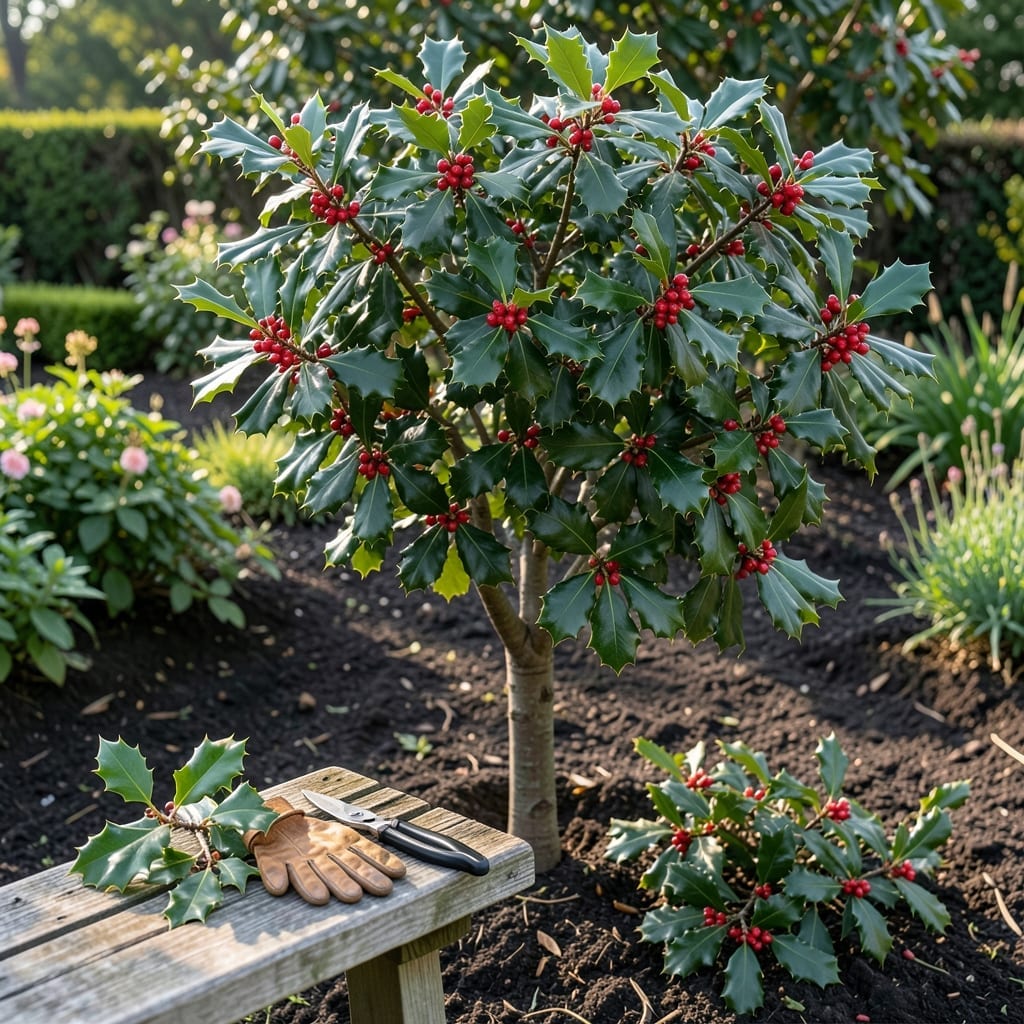
Timing your holly tree trimming correctly can mean the difference between a thriving, lush 🌳 and one that struggles to recover.
I’ve seen too many well-intentioned gardeners prune at the wrong time, only to watch their Holly Tree stress or grow sparsely. It’s not just about when you cut—it’s about working with the tree’s natural rhythm.
In zones 5-9, the best window is early spring or fall, when the plant can heal quickly and avoid winter damage. This timing helps prevent disease and encourages strong, healthy growth.
Discover why these seasons work best and how to make every snip count for your Holly Tree’s long-term vitality.
Timing is everything when it comes to pruning your holly tree. I’ve found that late winter to early spring is the sweet spot for most varieties. This window ensures you avoid cutting off new growth or flower buds.
Trimming during dormant season helps the tree direct energy toward healing. It also gives your holly a head start for the growing season ahead. Just avoid pruning in late summer or fall, as this can stimulate tender new growth that may not survive winter.
| Season | Best For | Avoid |
|---|---|---|
| Late Winter | Shape, remove dead wood | Heavy pruning |
| Early Spring | Encourage new growth | Cutting flower buds |
| Late Summer | Light trimming | Major pruning |
| Fall | Minor adjustments | Any cuts |
For American holly and English holly, I recommend pruning in March or April. This timing aligns with the tree’s natural growth cycle, promoting vigorous regrowth and maintaining its iconic shape.
If you live in warmer climates, like USDA zones 8-9, you can trim a bit earlier. Cooler zones, such as 5-7, should stick to the standard late winter to early spring window to prevent cold damage.
Always check your local frost dates to fine-tune your timing. A light trim in early fall can also help maintain shape, but avoid heavy pruning then, as it can weaken the tree before winter.
I’ve noticed that holly trees pruned at the right time recover faster and produce more vibrant foliage. They’re also less susceptible to pests and diseases when trimmed during their dormant phase.
Remember, berry production depends on timing too. If you prune too late in spring, you might cut off the flower buds that would have become berries in fall. This is why early spring or late winter is so crucial.
For dwarf holly varieties, the same timing rules apply, but you can be a bit more flexible. These smaller shrubs often respond well to light pruning throughout the growing season to maintain their compact shape.
Finally, always use clean, sharp tools to make precise cuts. This minimizes stress on the tree and reduces the risk of disease. I like to disinfect my pruners with rubbing alcohol between cuts, especially when working with multiple plants.
With the right timing and care, your holly tree will reward you with lush, healthy growth and a stunning appearance year-round ✂️
Pruning your holly tree properly ensures healthy growth and a beautiful shape. I always start by gathering the right tools: sharp bypass pruners, loppers for thicker branches, and safety gear like gloves. ☀️
Begin by removing any dead or diseased branches first, as these can drain the tree’s energy. Then, focus on shaping the tree by trimming back overgrown areas to maintain its natural form. ✂️
Timing is everything. I prefer late winter or early spring before new growth starts, but light pruning can also be done in late summer if needed. Avoid heavy pruning in fall, as it can encourage tender new growth that won’t survive winter. 🌳
For formal hedges, use a string line as a guide to keep edges straight. If you’re shaping a mature holly, thin out the center to improve airflow and reduce disease risk. Always cut back to a lateral branch or bud to encourage healthy regrowth.
After pruning, clean up all debris around the base to prevent pests and diseases. Water the tree deeply to help it recover, especially if the weather is dry or hot. This small effort makes a big difference. 💧
Finally, remember that holly trees are resilient, but proper technique keeps them thriving for years. If you’re unsure, start with light pruning and observe how the tree responds before making more drastic cuts.