
Beautiful Plants For Your Interior
Beautiful Plants For Your Interior
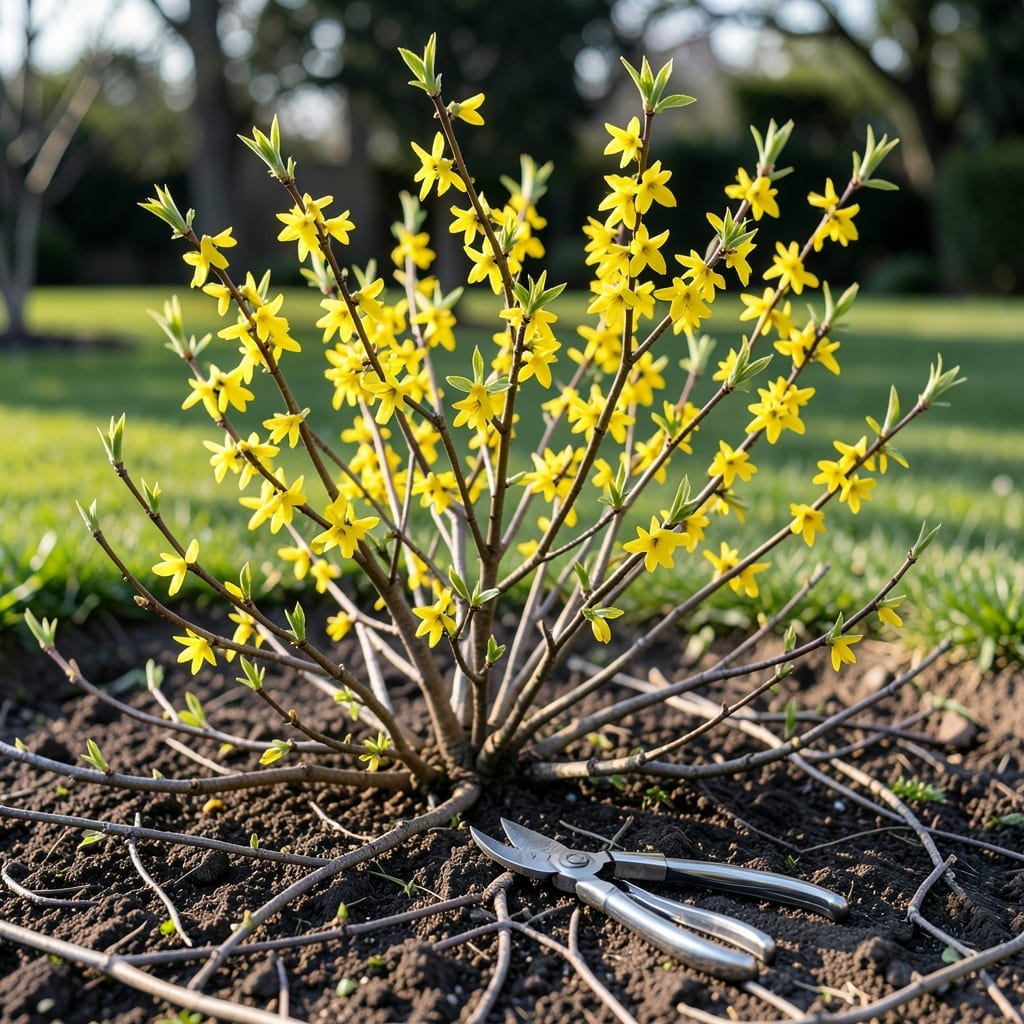
Timing your forsythia trimming correctly is the key to next year’s vibrant yellow blooms—prune too early or too late and you risk sacrificing flowers entirely.
The 🌼 Forsythia sets its buds on old wood, meaning those beautiful blossoms you love depend on when you pick up your pruners. Discover why this timing matters more than you think.
I’ve seen too many gardeners accidentally cut away next season’s flowers by trimming at the wrong time. The good news? There’s a simple window that ensures you’ll get the best results.
Let me walk you through the optimal timing and techniques so your forsythia thrives year after year. You’ll be amazed at the difference proper timing makes.
I’ve learned the hard way that forsythia blooms on old wood, meaning the flower buds for next year form right after the current blooms fade. This is why timing is everything when it comes to pruning.
If you trim your forsythia shrub in fall or winter, you’ll likely cut off the very buds that would have burst into those cheerful yellow flowers next spring. That’s a heartbreaking mistake no gardener wants to make.
| Stage | Action |
|---|---|
| Early Spring | Blooms appear |
| Right After Blooming | Best time to prune |
| Late Summer | Avoid pruning |
| Fall/Winter | Do not prune |
The optimal window for trimming is the 4-6 weeks immediately following the last bloom. This gives your forsythia enough time to grow new wood that will support next year’s flower buds.
I always mark my calendar for late April to early May in USDA zones 5-8, which is when most forsythia varieties finish blooming. This timing ensures I’m not cutting off any potential flowers.
Pruning at this time also allows the plant to recover quickly from the stress of trimming. The warmer temperatures and increased sunlight of late spring promote rapid new growth.
If you miss this window, resist the urge to prune later in the year. Summer pruning can stimulate new growth that won’t have time to harden off before winter, making your shrub more vulnerable to cold damage.
Remember, forsythia is a hardy shrub, but it’s not invincible. Improper timing can set back its growth and reduce its flowering potential for years. I’ve seen overzealous gardeners turn their vibrant forsythia into a bare skeleton by pruning at the wrong time.
For best results, I recommend using sharp bypass pruners and making clean cuts at a 45-degree angle. This helps the plant heal faster and reduces the risk of disease.
Finally, don’t forget to step back and admire your work. A well-pruned forsythia will reward you with more abundant blooms and a healthier shape next spring. It’s amazing how such a simple task can make such a big difference in your garden’s appearance. ✂️
I always recommend pruning forsythia shrubs right after their spring blooms fade. This timing ensures you don’t accidentally remove the flower buds forming for next year, which develop on old wood from the previous season.
For the best results, grab your sharp pruning shears and start trimming as soon as the yellow flowers begin to brown. This gives the plant plenty of time to produce new growth that will bloom next spring. ✂️
When I prune my forsythia bushes, I focus on removing about one-third of the oldest stems each year. This rejuvenates the plant while maintaining its natural shape and encouraging vigorous new growth for future blooms.
Don’t forget to disinfect your pruners between cuts if you’re working with multiple plants. This simple step prevents the spread of diseases that could harm your landscape shrubs. I use a 10% bleach solution for quick sanitation.
After pruning, I like to give my forsythia a light feeding with a balanced fertilizer to support recovery. This helps the plant direct energy toward producing new flower buds for the following year.
Remember, the worst time to prune is in late summer or fall, as this can stimulate new growth that won’t have time to harden off before winter. Stick to the post-bloom window for the healthiest, most floriferous forsythia. 🌼