
Beautiful Plants For Your Interior
Beautiful Plants For Your Interior
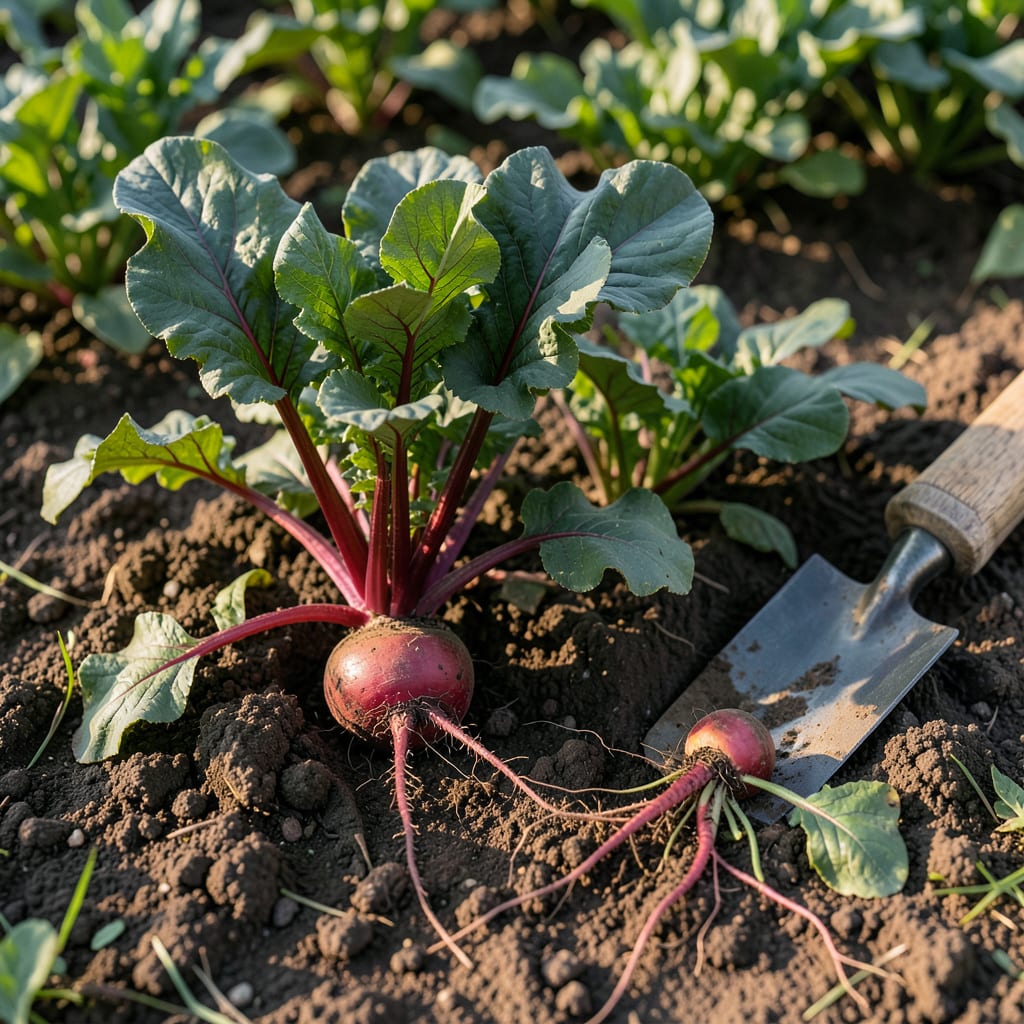
Nothing beats the satisfaction of pulling sweet Beetroot 🌱 from your own garden. Timing your planting just right means the difference between woody roots and tender, flavorful harvests.
From seed to table usually takes 50-70 days, but a few simple tricks can speed up or delay your harvest. Let me show you how to nail the perfect timing.

I love how beetroot varieties offer different maturation times, letting me plan my garden for continuous harvests. Some are ready in as little as 50 days, while others take up to 80 days or more.
Climate, soil, and care all play a role in how quickly your beets grow. Cooler temps slow things down, while consistent watering and loose soil speed up the process. 🌱
| Early Wonder | 50-55 days | Fastest harvests |
| Detroit Dark Red | 60-65 days | Classic flavor |
| Boltardy | 60-70 days | Cold tolerance |
| Chioggia | 70-80 days | Striped roots |
In my experience, Early Wonder is perfect for gardeners who can’t wait to taste their first beets. These speedy growers produce tender roots in just over a month, ideal for early spring or fall planting.
For a classic beet flavor, I always include Detroit Dark Red. This variety takes about 60-65 days and gives me those deep red, sweet roots I love. It’s incredibly reliable in most climates.
Boltardy is my go-to for cooler areas. It resists bolting (going to seed) in cold weather and still delivers in 60-70 days. Perfect for early spring or late summer planting.
If you’re patient, Chioggia rewards you with stunning striped roots in about 70-80 days. The wait is worth it for those beautiful, mild-flavored beets that impress everyone.
Remember, these times are averages. In my garden, I’ve found that consistent moisture and loose soil can shave a few days off the timeline. Compacted soil makes it harder for roots to expand.
Temperature matters too. Beets grow fastest in 60-65°F soil. Cooler than that and they’ll take longer. Hotter weather can make roots woody, so I aim for spring or fall planting.
For the quickest harvest, I start seeds indoors 2-3 weeks before the last frost. This gives them a head start. Just be careful with transplanting—beets don’t love being moved.
🌿I’ve found that with a few simple techniques, you can control your beetroot harvest timeline. Whether you want an early crop or need to extend the season, these methods work.
From succession planting to row covers, small adjustments make a big difference. Let me walk you through my proven strategies for timing your harvest perfectly.
For an early harvest, I always start seeds indoors. This gives them a head start before transplanting. Just remember beets dislike being moved, so use peat pots that can go directly into the soil.
Succession planting is my secret for fresh beets all season. I sow a new batch every 2-3 weeks until late summer. This way, I always have tender young beets ready while older ones mature.
When I need to delay harvest, I use row covers in late summer. This protects the plants from early frosts and can add 2-3 weeks to the growing season, especially for slower varieties.
Thinning seedlings is crucial. Crowded beets compete for resources, slowing growth. I thin to 3-4 inches apart when seedlings are 2 inches tall. The thinnings make great microgreens!
🌱I don’t just rely on days to maturity when harvesting my beets. The most reliable signs are visual cues from the plant itself, ensuring I pick at peak sweetness and tenderness.
While the calendar says 50-70 days for most varieties, I watch for shoulders peeking above the soil line and root diameter reaching 1-3 inches. These are nature’s way of saying it’s time.
Pulling too early when roots are smaller than 1 inch
Waiting too long makes roots woody and tough
Harvesting during hot afternoon can stress plants
The first sign I look for is shoulder protrusion. When the top of the beet root becomes visible above the soil, it’s a clear indicator that the root is swelling and nearly ready.
I also check the root diameter by gently brushing away soil at the base. Beets are ready when they’re 1-3 inches wide. Any smaller and they lack flavor; much larger and they become fibrous.
Leaf size and vibrant color matter too. Healthy beets have 6-8 inch leaves with deep green color. Yellowing leaves often signal it’s time to harvest before the root becomes overmature.
For the best flavor, I harvest in the cool morning hours. This is when the roots have the highest sugar content. I use a garden fork to gently lift the beets, being careful not to damage the roots.
🌿Most varieties reach harvest size in 50-70 days from seed. Early types like Early Wonder may be ready in as little as 50 days, while larger varieties can take up to 80 days.
Yes! You can snip a few outer leaves when they reach 4-6 inches tall. Avoid removing more than 1/3 of the foliage at once to keep the root growing strong.
Overmature beets become woody and tough. Their flavor turns bitter, and they may develop a spongy texture. Harvest when roots are 1-3 inches wide for best quality.
Beets grow fastest in 60-65°F soil. Cooler temps slow growth, while heat can cause bolting (premature flowering). Use row covers in early spring to warm the soil.
