
Beautiful Plants For Your Interior
Beautiful Plants For Your Interior
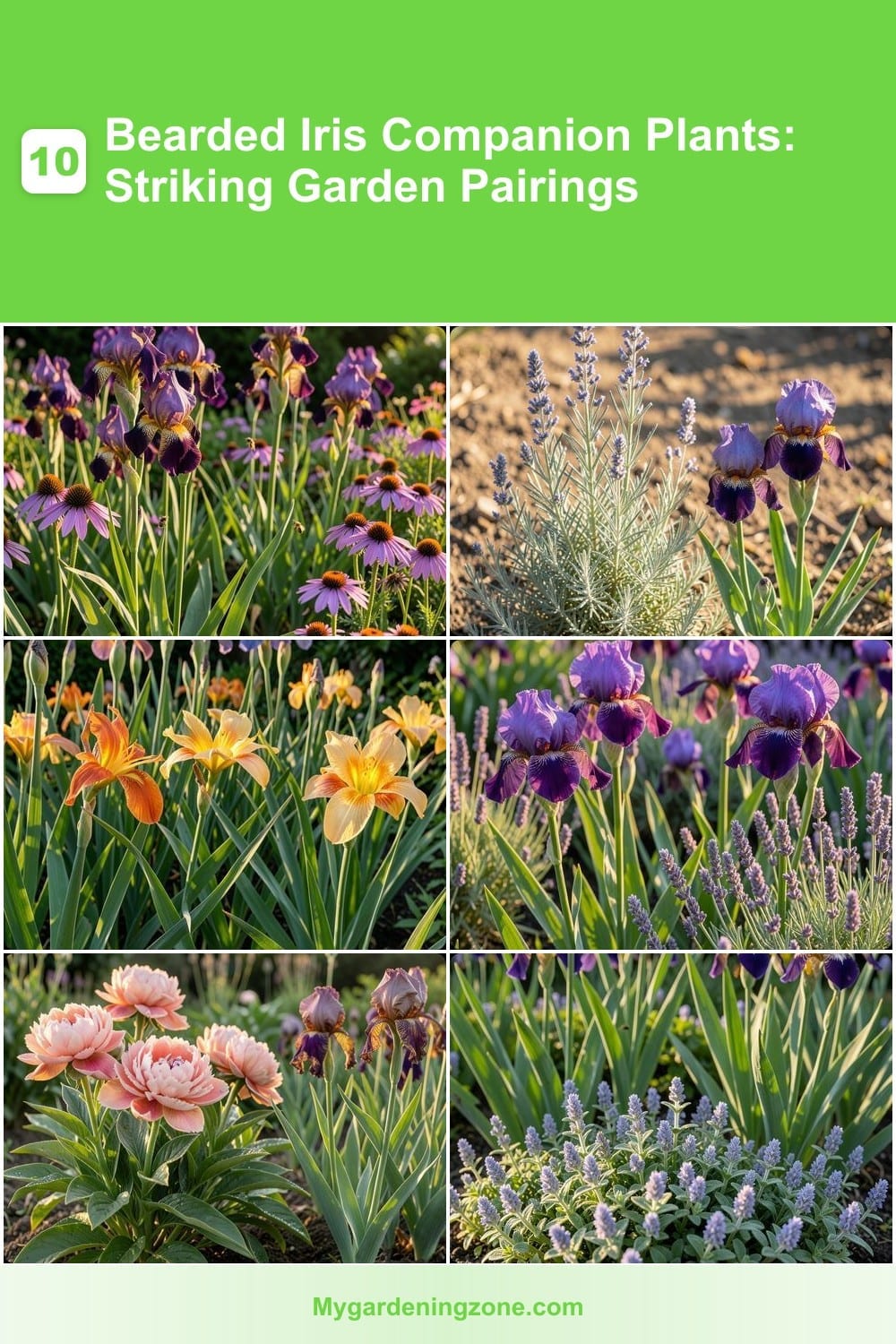
Bearded irises shine in any garden, but the right companions can elevate their beauty and health. These ten plants pair perfectly with bearded irises, enhancing colors, textures, and pollinator appeal while sharing similar growing conditions.
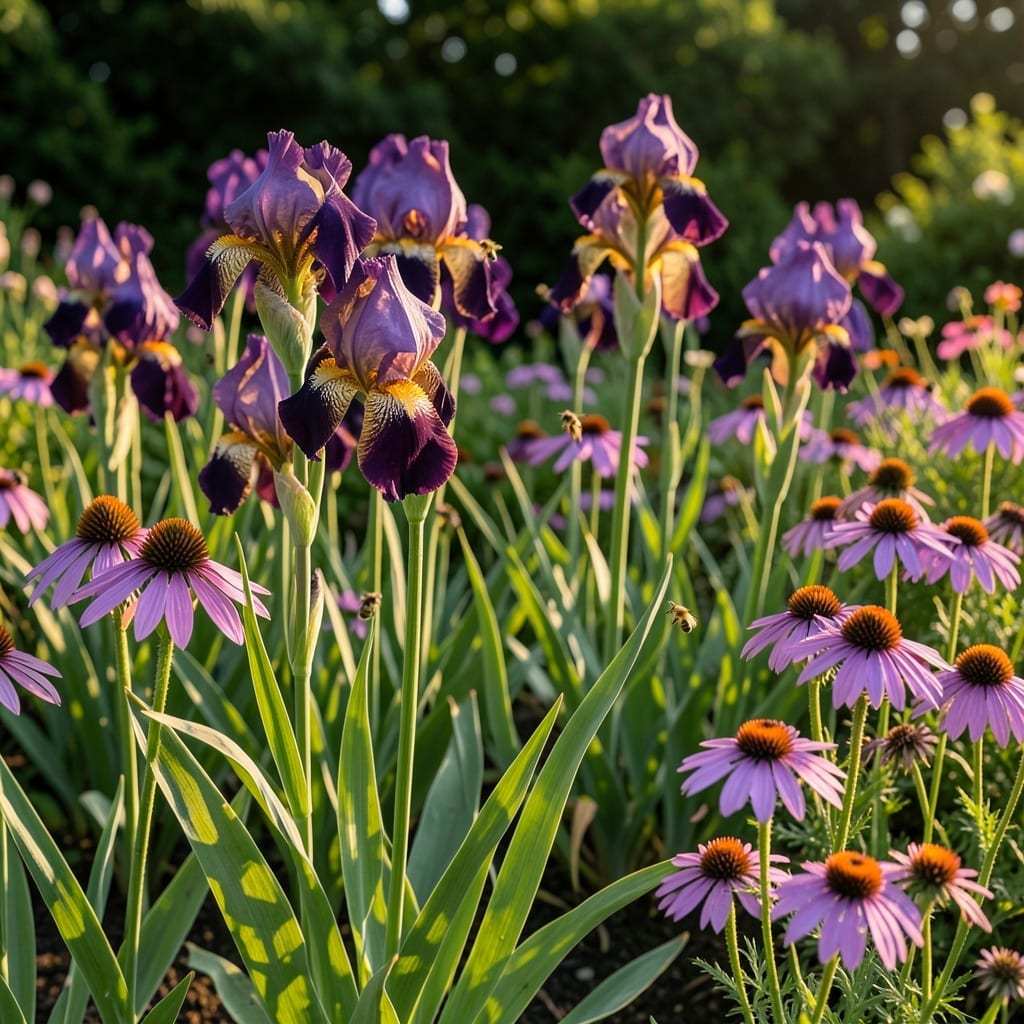
Looking to add wildflower charm to your iris beds? Purple coneflower is your perfect match. This native perennial thrives in the same full-sun conditions as bearded irises, making it an effortless pairing for vibrant, low-maintenance gardens.
Drought-tolerant and pollinator-friendly, coneflowers attract bees and butterflies while complementing iris blooms with their daisy-like purple petals. Their sturdy stems and long bloom season ensure your garden stays colorful from early summer to fall.
Ideal for gardeners who want to support local ecosystems while keeping their beds simple and stunning. 🌿
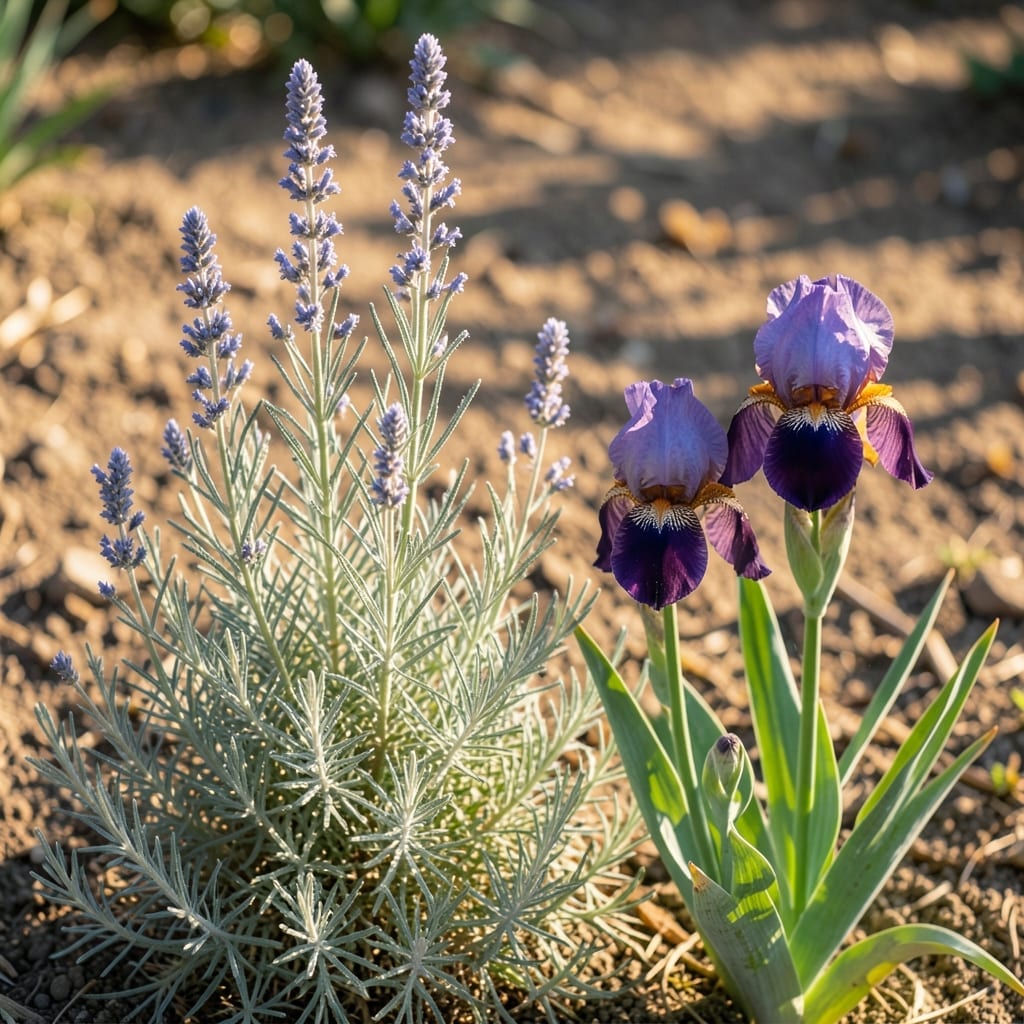
Want to create a drought-defying duo? Russian sage pairs beautifully with bearded irises, offering silvery foliage that contrasts stunningly with iris blooms while sharing the same love for hot, dry conditions.
Its airy lavender-blue spikes rise above iris flowers, adding height and movement to your garden. Both plants require minimal water and thrive in full sun, making them ideal for low-maintenance landscapes.
Perfect for gardeners in arid climates or those seeking a fuss-free, colorful combination that attracts pollinators. 🌿
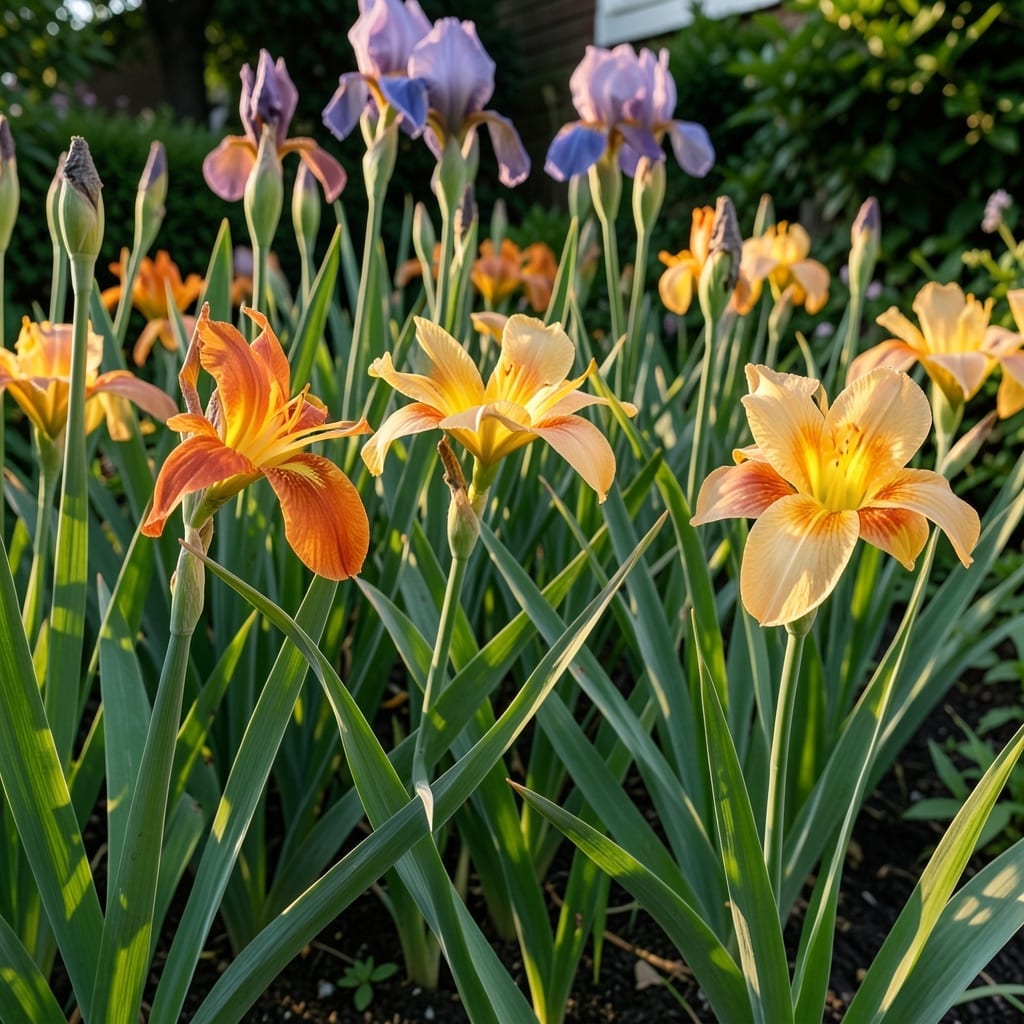
Tired of the mid-summer lull after your bearded irises finish blooming? Daylilies step in to keep the color going strong with their cheerful, trumpet-shaped flowers.
These hardy perennials share the same sword-like foliage as irises, creating a cohesive look while filling the bloom gap from late spring through fall. They thrive in similar full-sun conditions and require minimal care, making them a perfect match for iris companions.
Ideal for gardeners who want continuous color and a natural, flowing aesthetic in their beds. 🌿
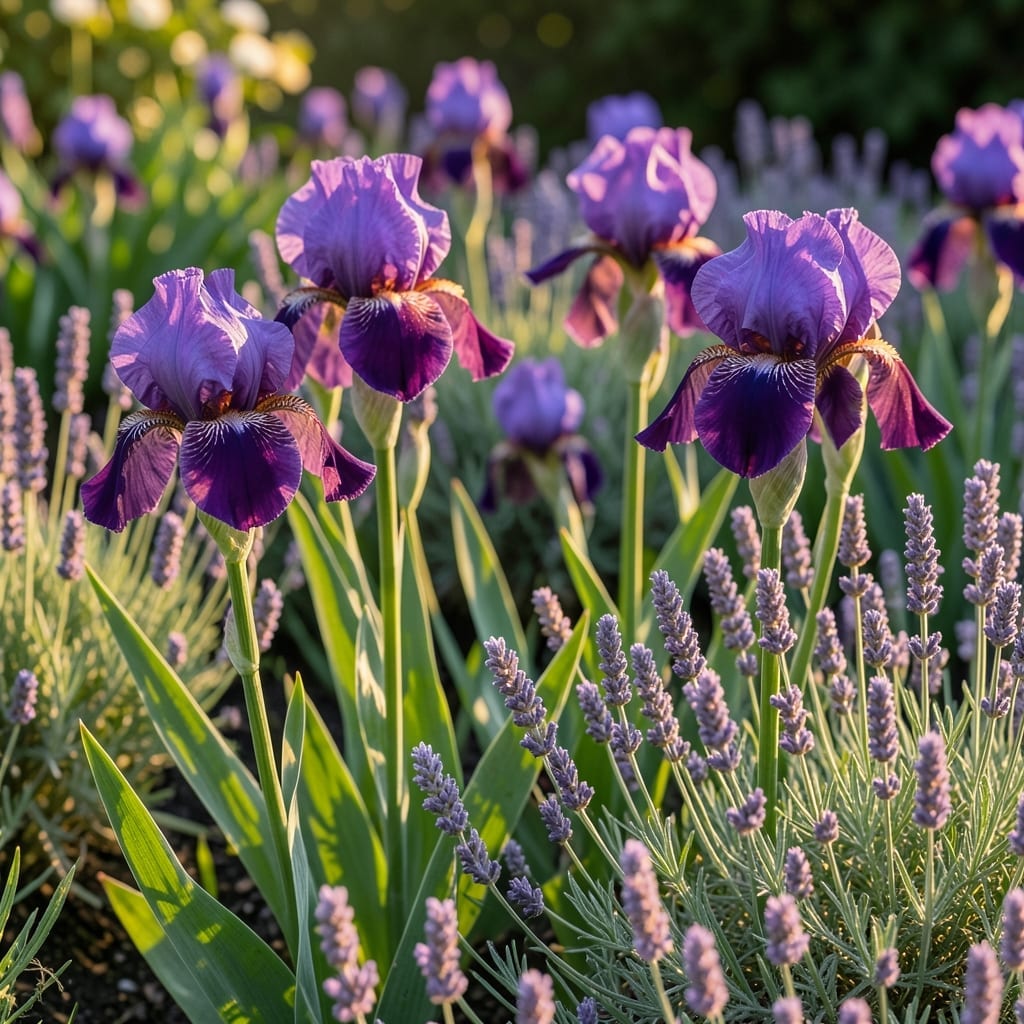
Craving a sophisticated color palette with minimal effort? Lavender pairs exquisitely with bearded irises, mirroring their purple hues while adding fragrant charm to your garden.
Its silvery-green foliage creates a striking contrast with iris leaves, and both plants thrive in full sun and well-drained soil. Plus, lavender’s deer-resistant nature makes it a practical choice for gardens prone to wildlife visits.
This duo is perfect for gardeners who love elegant, low-maintenance combinations that attract pollinators and deter pests. 🌿
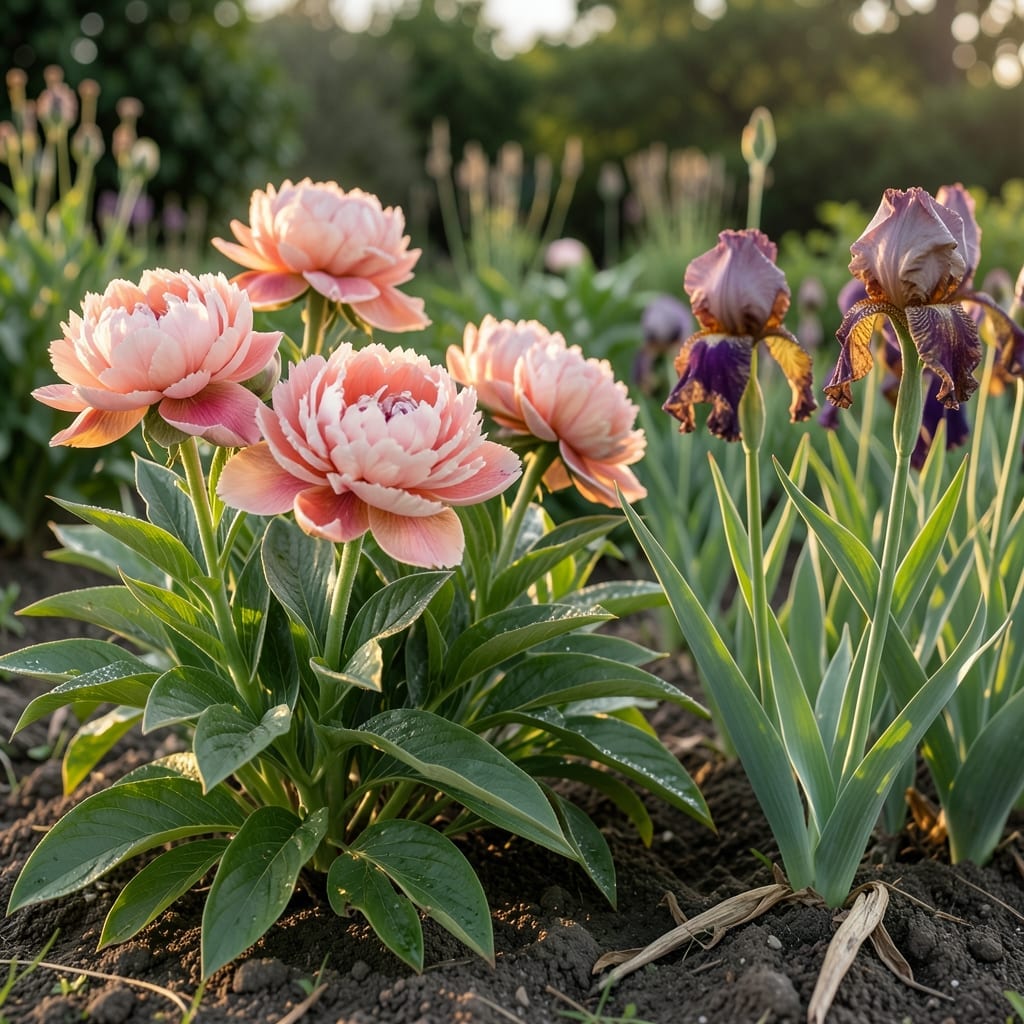
Want to extend your garden’s floral show while solving a common iris issue? Peonies bloom just as bearded irises begin to fade, creating a seamless transition of color and fragrance in your late spring garden.
Their lush, mounding foliage beautifully conceals the often-unsightly dieback of iris leaves, keeping your beds looking tidy. Both plants thrive in full sun to partial shade and well-drained soil, making them ideal partners for low-maintenance elegance.
Perfect for romantic gardeners who love dramatic, fragrant blooms and want to maximize their spring-to-summer color display. 🌸
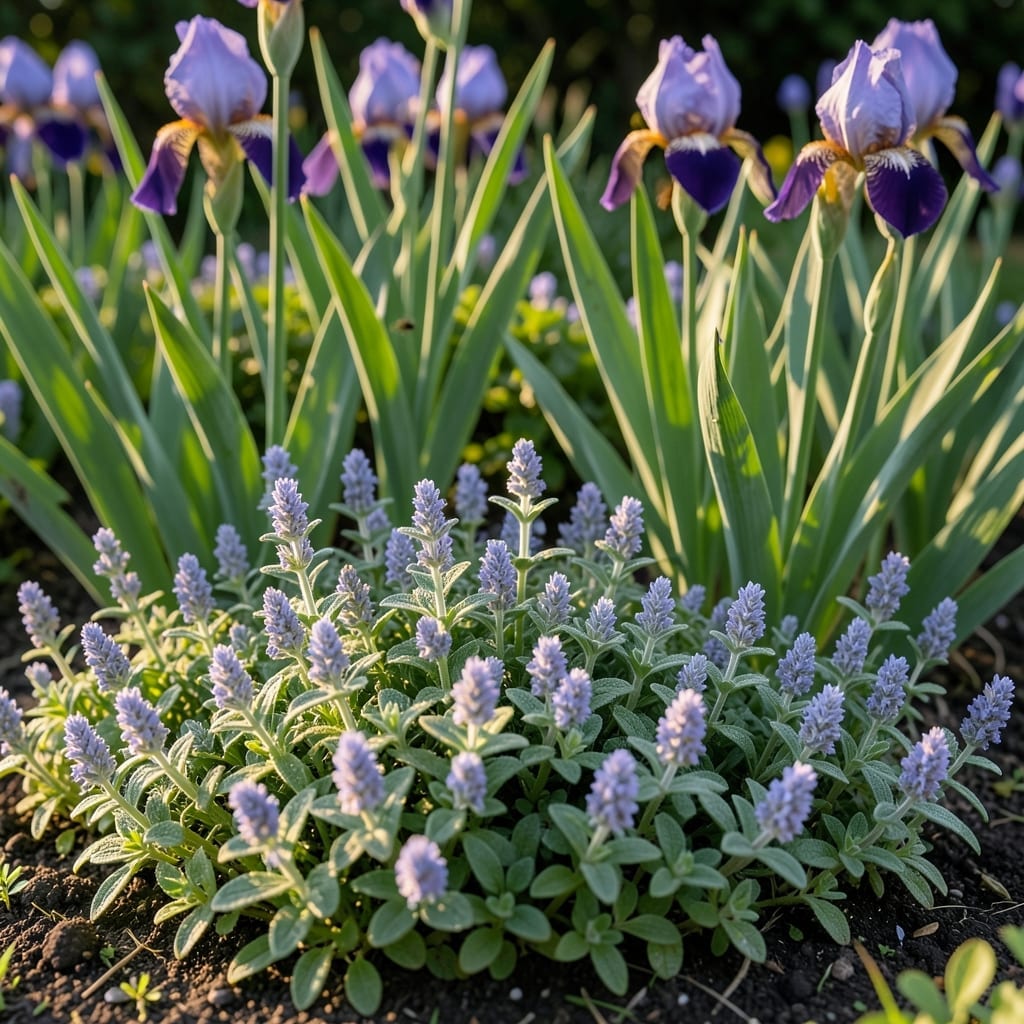
Need a living mulch that works as hard as it looks? Catmint spreads gently to form a lush, weed-smothering mat at the base of your bearded irises, eliminating bare soil without competing for space.
This long-blooming perennial produces lavender-blue flowers from late spring to frost, drawing bees and butterflies to your iris plantings. It thrives in the same full-sun conditions as irises and tolerates drought once established, making it a low-maintenance ground cover.
Perfect for gardeners who want to reduce weeding while boosting pollinator activity in their beds. 🌿
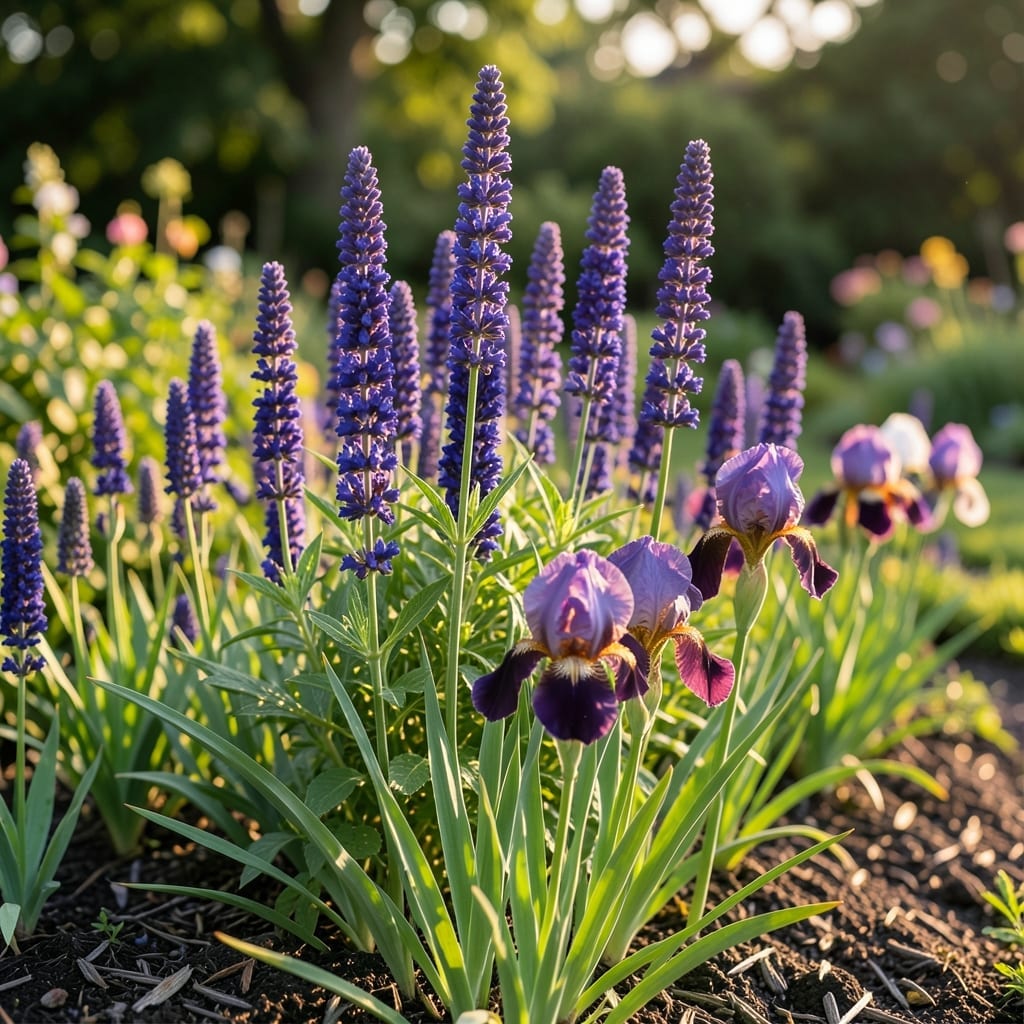
Looking to add drama and height to your iris beds? Salvia delivers with its striking vertical spikes that rise above bearded irises, creating a dynamic contrast that makes both plants stand out in mixed borders.
Choose blue or purple salvia varieties for a bold color pop against iris blooms. These hardy perennials thrive in full sun and well-drained soil, matching the growing conditions of bearded irises while adding architectural interest to your garden.
Perfect for gardeners who want to create eye-catching layers and vibrant color combinations without extra maintenance. 🌿
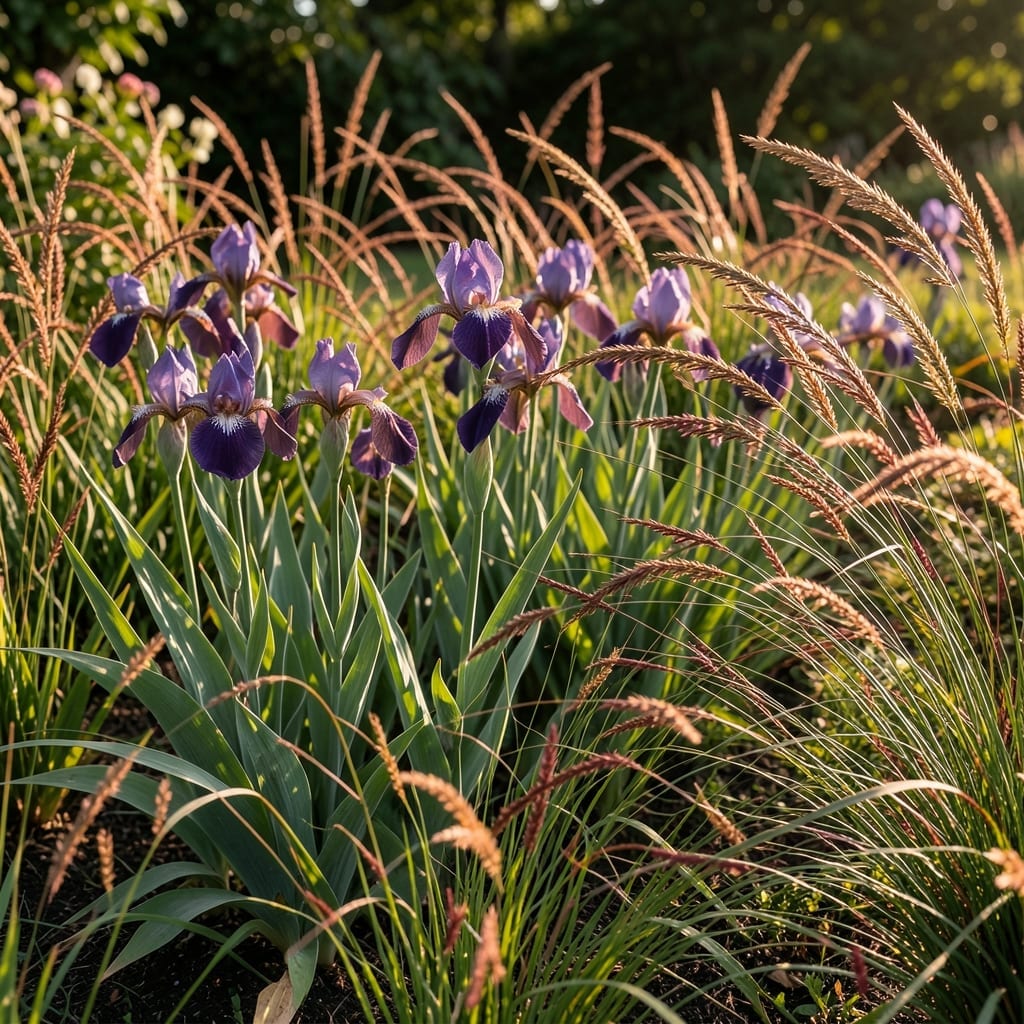
Tired of static garden beds that look flat after blooms fade? Ornamental grasses bring life to your iris plantings with their graceful, swaying forms that catch every breeze.
Varieties like feather reed grass or switch grass offer airy plumes and arching foliage that soften the rigid vertical lines of iris leaves. They provide year-round structure, from fresh spring growth to golden winter interest, all while matching irises’ love for full sun and well-drained soil.
This pairing is ideal for gardeners seeking four-season appeal and movement in their landscapes. 🌿
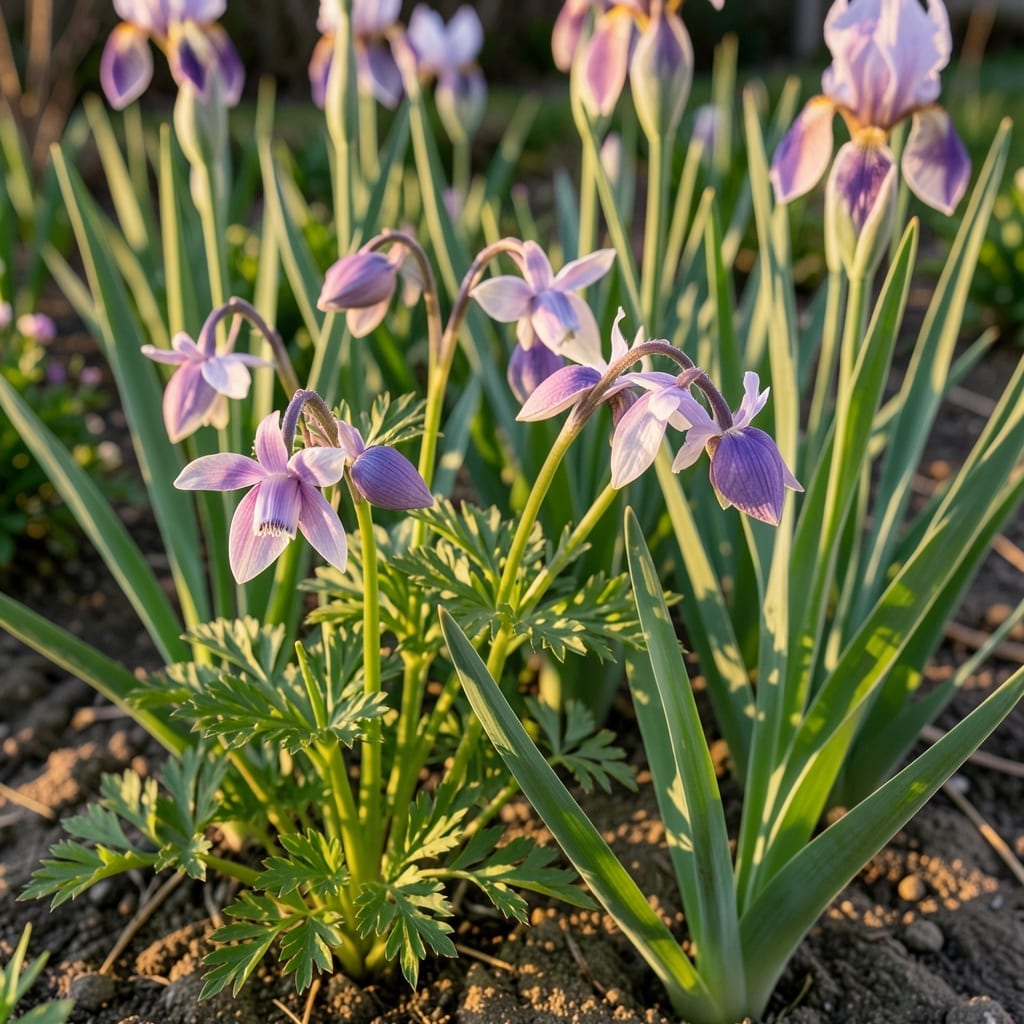
Want to fill the spring gap between your iris varieties? Columbine blooms early, offering nodding, spurred flowers that add a playful touch to your garden’s vertical layers before later irises take the stage.
These delicate perennials thrive in partial shade to full sun and well-drained soil, mirroring the needs of bearded irises. Their unique, airy foliage contrasts beautifully with iris leaves, while the flowers attract hummingbirds and pollinators.
Perfect for gardeners who love whimsical spring blooms and want to extend their garden’s seasonal interest. 🌿
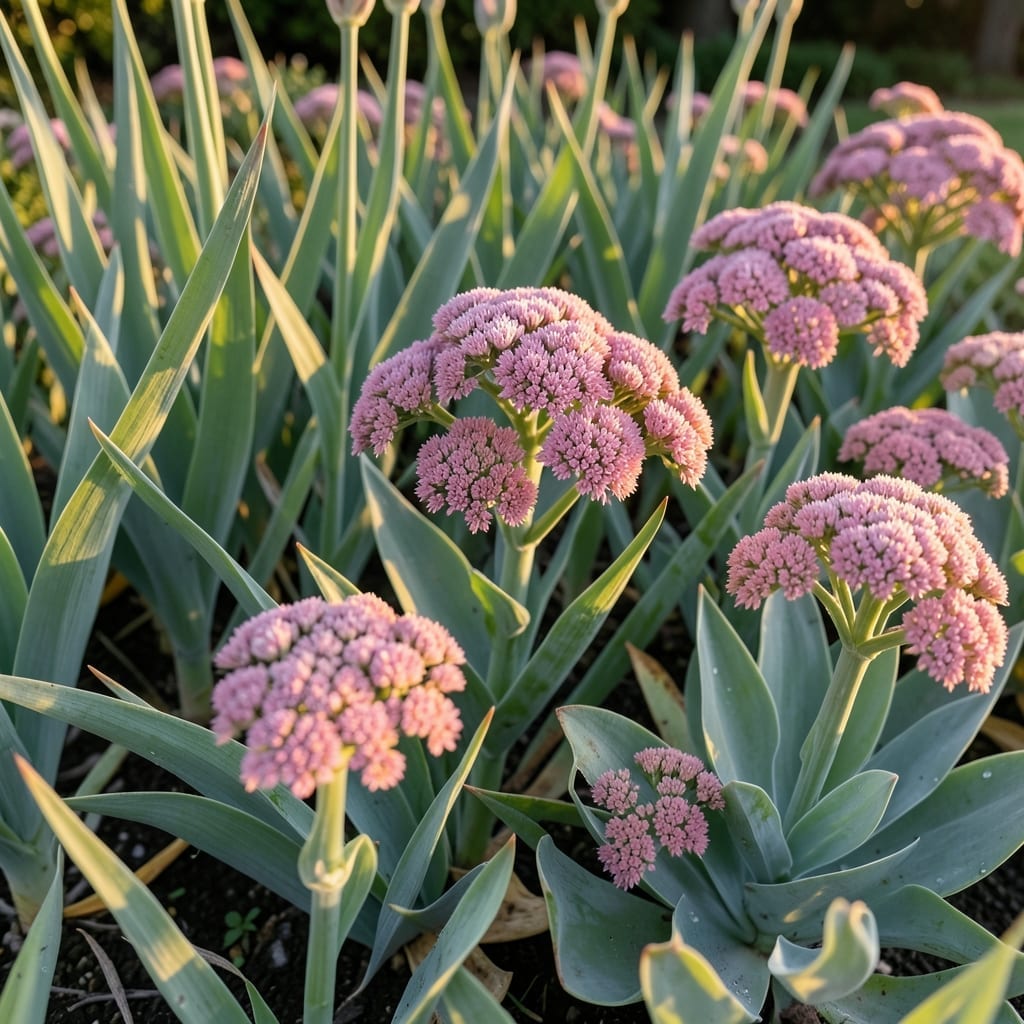
When your bearded irises finish their spring show, sedum steps in to keep the garden vibrant. Its succulent foliage offers rich texture contrast against iris leaves, while late-summer blooms extend the floral display.
Varieties like ‘Autumn Joy’ produce clusters of pink flowers that thrive in the same full-sun, well-drained conditions as irises. Both plants share exceptional drought tolerance, making them ideal partners for low-water gardens.
Perfect for gardeners who want year-round interest with minimal effort, as sedum’s foliage remains attractive even after blooms fade. 🌿