
Beautiful Plants For Your Interior
Beautiful Plants For Your Interior
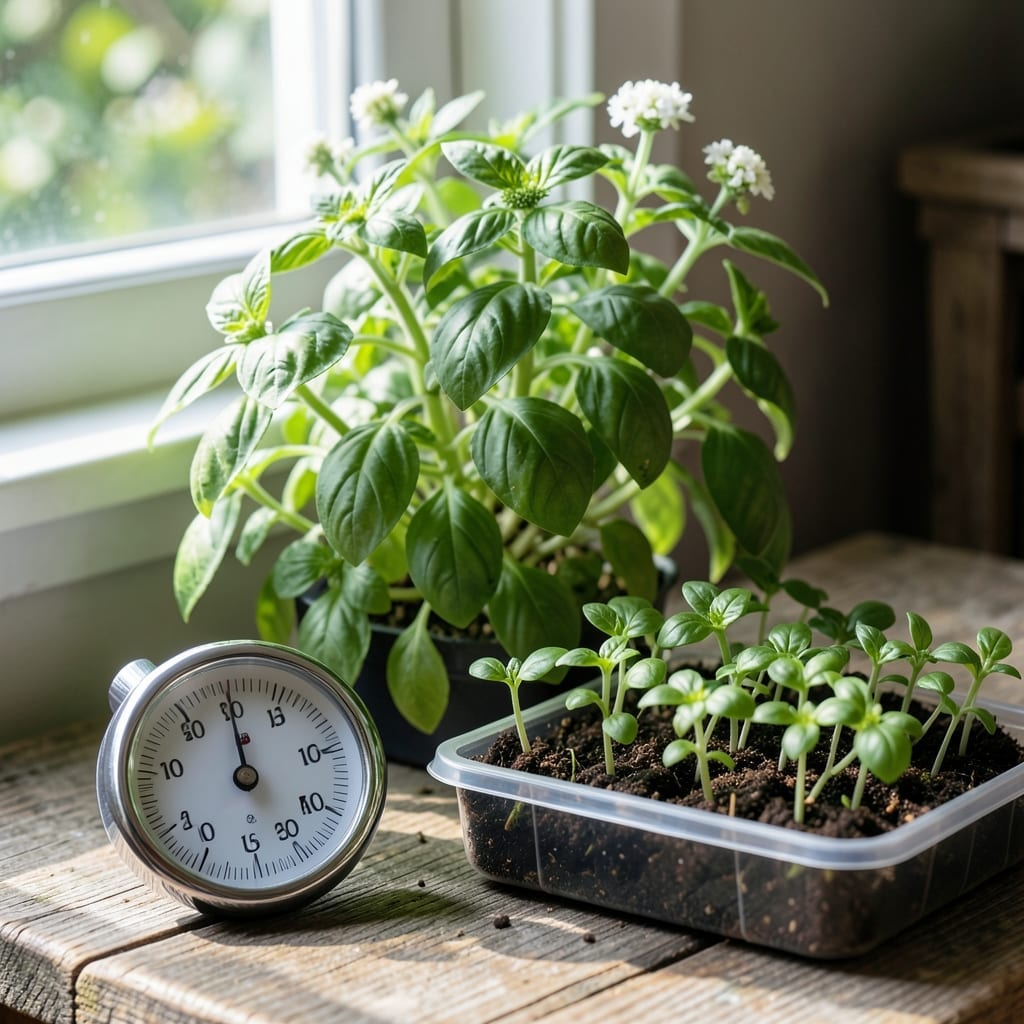
Getting Basil seeds to sprout quickly starts with one critical factor: temperature. The right warmth can cut your waiting time in half.
I’ve seen gardeners struggle with 🌿 Basil germination simply because they overlooked this key detail. It’s not about luck—it’s about science.
Whether you’re starting seeds indoors or planting directly outside in zone 6a, maintaining the proper temperature range makes all the difference. You’ll be amazed how much faster your seeds will grow.
Discover how to create the perfect conditions for your Basil seeds to thrive. Let’s get those seedlings off to the strongest start possible.
When I start basil seeds, I know temperature is the make-or-break factor for fast sprouting. Most gardeners don’t realize that 70-85°F is the sweet spot for basil germination.
Below 60°F, germination slows dramatically or fails entirely, while above 90°F can stress the seeds. I’ve seen seeds take 2 weeks to sprout at 65°F, but just 5-7 days at 75°F.
| Requirement | Specification |
|---|---|
| Optimal Range | 70-85°F |
| Minimum Threshold | 60°F |
| Maximum Threshold | 90°F |
| Best Soil Temp | 70°F+ |
| Germination Time | 5-10 days |
I’ve tested Genovese basil and Sweet Thai basil at different temps. Both germinated fastest at 75-80°F. However, purple basil varieties sometimes need 5°F warmer for best results.
The soil temperature matters more than air temp. I use a soil thermometer to check before planting. If the soil is below 70°F, I wait or use heat mats to warm it up.
Consistency is key. I’ve had poor results with temperature swings – even if the average is good. A stable 75°F beats fluctuating between 65-85°F every day.
For indoor starts, I place seed trays on top of the fridge where it’s naturally warmer. Outdoors, I use black plastic mulch to absorb heat. Both methods help maintain that ideal basil germination temp.
Remember that moisture and temperature work together. In cooler temps, I reduce watering to prevent rot. At 80°F+, I check moisture daily as soil dries faster.
I’ve found that pre-soaking seeds for 12 hours before planting can help at the lower end of the temp range. But nothing beats starting at the right temperature from day one.
If you’re struggling with slow germination, check your temps first. Nine times out of ten, that’s the issue. A simple heat mat can transform your basil growing success 🌱
I’ve found that maintaining the ideal basil germination temp requires different approaches for indoor and outdoor setups. Indoors, I rely on heat mats set to 75°F under seed trays for consistent warmth.
For outdoor planting, I wait until soil temps reach at least 70°F. I use a soil thermometer to check, as air temperature can be misleading. Black plastic mulch helps absorb and retain heat in the soil.
Indoors, I place seed trays on top of the fridge or near a south-facing window where it’s naturally warmer. I’ve also had success with DIY greenhouse setups using clear plastic containers to trap heat.
Outdoors, I time my planting with the seasons. In my Zone 6a garden, I wait until mid-April when soil temps consistently stay above 70°F. I also use row covers to maintain warmth during cooler nights.
For both setups, I monitor temperature fluctuations closely. Even a few hours below 60°F can set back germination. I use a minimum/maximum thermometer to track daily temperature ranges.
Remember that consistency is more important than perfection. A steady 72°F will outperform a setup that swings between 65-85°F daily. Your basil seeds will thank you with faster, stronger sprouting 🌱