
Beautiful Plants For Your Interior
Beautiful Plants For Your Interior
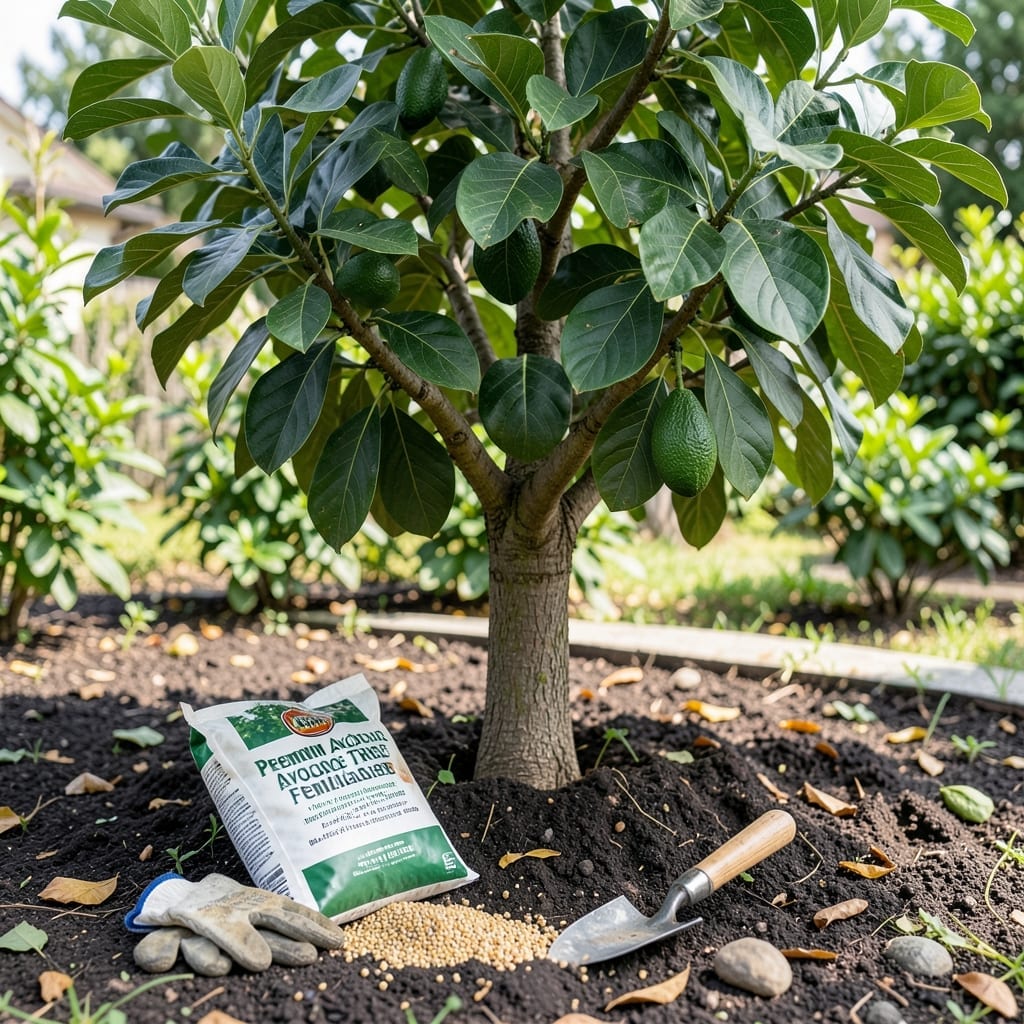
Growing a thriving 🥑 Avocado Tree requires more than just sunlight and water—it needs the right nutrients to produce lush foliage and abundant fruit.
The right plant food can make the difference between a struggling sapling and a flourishing tree. Without proper nourishment, your tree might never reach its full potential.
Discover how to give your Avocado Tree exactly what it needs for healthy growth and bountiful harvests with these essential feeding tips.

Avocado trees thrive when they receive the right balance of essential nutrients. These trees are heavy feeders, especially during their growing season. Without proper nourishment, they may struggle to produce lush foliage or fruit.
I’ve found that focusing on nitrogen, phosphorus, potassium, and key micronutrients like zinc and iron makes all the difference. Each plays a unique role in your tree’s development and health. 🌳
| Nutrient | Purpose | Key Benefits |
|---|---|---|
| Nitrogen (N) | Promotes leaf growth | Vibrant green foliage |
| Phosphorus (P) | Supports root development | Strong root systems |
| Potassium (K) | Enhances fruit production | Improves fruit quality |
| Zinc (Zn) | Prevents leaf yellowing | Avoids deficiency symptoms |
| Iron (Fe) | Boosts chlorophyll production | Keeps leaves green and healthy |
Nitrogen is the most critical for vegetative growth. It helps your avocado tree develop dense, green leaves, which are vital for photosynthesis. Without enough nitrogen, leaves may turn pale or yellow.
Phosphorus strengthens the root system, ensuring your tree can absorb water and nutrients efficiently. It’s especially important for young trees establishing themselves in the soil.
Potassium is key for fruit development. It helps regulate water movement within the tree and improves disease resistance. A deficiency can lead to poor fruit quality or smaller yields.
Zinc and iron are micronutrients that often get overlooked but are just as important. Zinc prevents leaf mottling, while iron keeps leaves from turning yellow between the veins, a condition known as chlorosis.
I always recommend testing your soil pH before applying fertilizers. Avocado trees prefer a slightly acidic to neutral pH (6.0–7.0). If your soil is too alkaline, nutrients like iron and zinc become less available.
Applying a balanced fertilizer with an NPK ratio of 6-6-6 or 8-3-9 works well for most avocado trees. However, adjust based on your soil test results and the tree’s growth stage. 🌱
Remember, over-fertilizing can be just as harmful as under-fertilizing. Always follow the package instructions and monitor your tree’s response to ensure you’re providing the right amount of nutrients.
Choosing the right fertilizer type can significantly impact your avocado tree’s growth. I’ve seen trees thrive with organic fertilizers and others respond well to synthetic options. The key is matching the fertilizer to your tree’s growth stage. 🌿
For young trees, a balanced fertilizer with equal parts nitrogen, phosphorus, and potassium works best. As the tree matures, you might switch to a high-nitrogen formula to support leafy growth and fruiting.
| Fertilizer Type | Best For | Application Frequency |
|---|---|---|
| Organic (Compost) | Young trees | Every 2-3 months |
| Slow-Release Granules | Mature trees | Every 3-4 months |
| Liquid Feed | Fruiting stage | Monthly |
| High-Nitrogen | Leaf growth | Every 6 weeks |
Organic fertilizers like compost or manure improve soil structure and provide slow-release nutrients. They’re ideal for young avocado trees establishing their root systems. I often mix compost into the planting hole for a nutrient boost.
Slow-release granules are perfect for mature trees because they provide a steady supply of nutrients over time. This type reduces the risk of over-fertilizing, which can burn roots. Apply them at the drip line for best results.
Liquid feeds work well during the fruiting stage when trees need a quick nutrient uptake. They’re easy to apply and can be adjusted based on the tree’s needs. I use them monthly during the growing season.
Always follow the application rates on the fertilizer package. Too much can lead to leaf burn or nutrient imbalances. Watering deeply after applying helps distribute nutrients evenly through the root zone. 🌱