
Beautiful Plants For Your Interior
Beautiful Plants For Your Interior
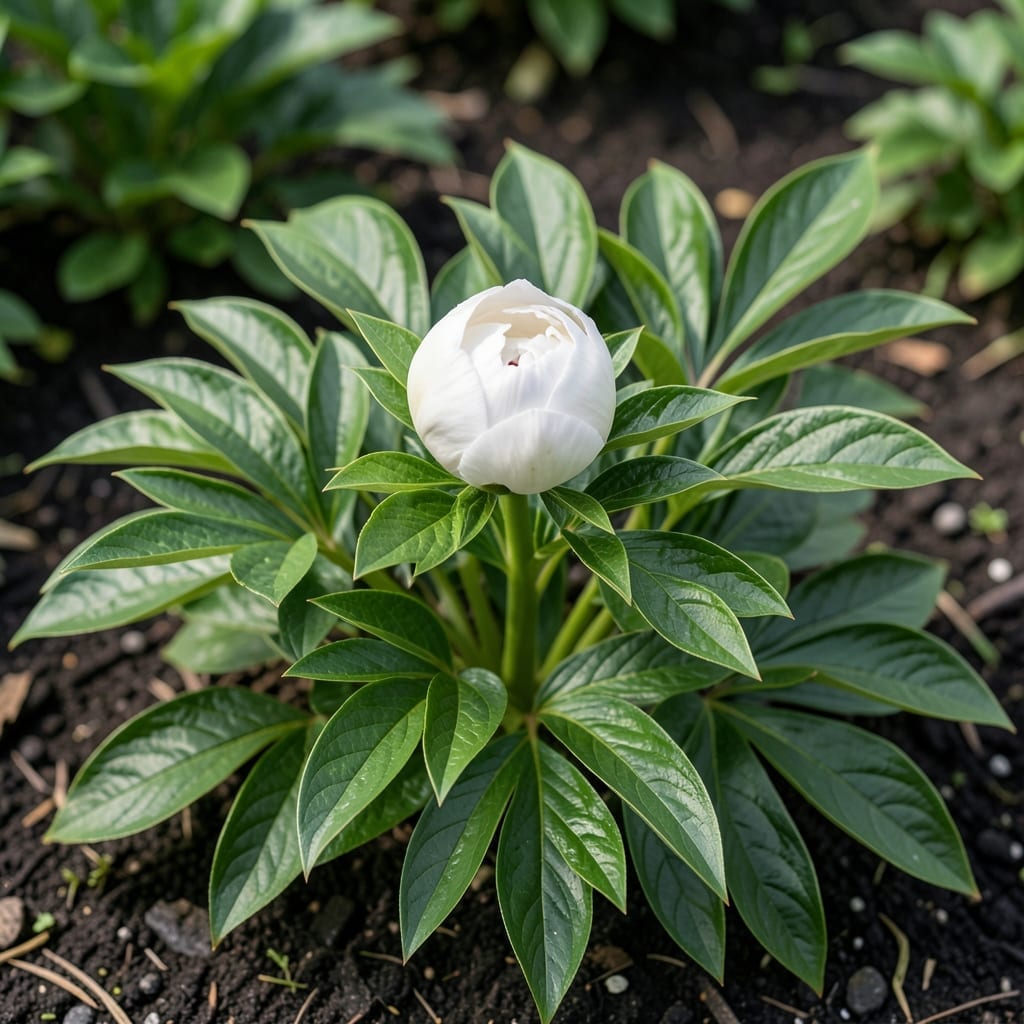
White peony buds promise show-stopping blooms if you nail the basics. I learned the hard way that these plants demand patience—sometimes 3 years before that first flower appears.
Full sun, well-draining soil, and proper spacing prevent the bud blast that ruins so many first attempts. Once established, they reward you with decades of lush, fragrant white flowers every spring.
📚 In This Guide
Here’s the method I use to coax the most stunning, long-lasting blooms from peonies every season.
Choose a location with full sun exposure, as peonies require at least 6-8 hours of direct sunlight daily to produce strong stems and abundant buds. I always test the spot by observing sunlight patterns throughout the day—morning sun with afternoon shade won’t cut it for these light-hungry plants.
The soil must be well-draining yet rich in organic matter. Test drainage by digging a 12-inch deep hole and filling it with water. If it drains completely within 4 hours, you’re good. If not, amend with compost or consider a raised bed. Peonies planted in soggy soil will rot before they ever bloom.
Dig a hole 18 inches wide and 12-18 inches deep to give roots plenty of room to establish. The critical detail: position the peony so the “eyes” (those pinkish buds on the crown) sit no more than 1-2 inches below soil level. Planting too deep is the number one reason peonies fail to bloom.
I place the root crown in the hole with eyes facing upward, then backfill with native soil mixed with 25% compost. Water thoroughly to settle the soil, then don’t water again until you see new growth emerging. Overwatering at this stage encourages rot rather than root development.
Peony buds are notoriously heavy, and stems often flop under their weight. Install peony rings or 3-4 foot tall grow-through supports immediately after planting. Waiting until buds form means you’ll risk breaking stems during installation.
For herbaceous varieties, I use the classic metal rings that expand as plants grow. For tree peonies, a sturdy stake and soft tie system works better. The support should be invisible by summer, completely hidden by the lush foliage.
Feed established plants in early spring with a low-nitrogen, high-phosphorus fertilizer (like 5-10-10) just as new shoots emerge. Scratch it into the soil surface 6 inches away from the crown to avoid burning the plant. I follow this with a 2-inch layer of compost as mulch.
Prune herbaceous peonies in fall after foliage dies back, cutting stems to 2-3 inches above ground. For tree peonies, only remove dead wood in spring. This timing prevents removing potential bud-bearing wood. Watch for reddish-pink buds forming in late summer—these are next year’s flowers.
In late winter, remove any mulch to prevent smothering new growth. As buds form in spring, watch for botrytis blight—a fungal disease that turns buds brown. Remove affected buds immediately and space plants for good air circulation to prevent recurrence.
For the biggest blooms, I practice selective bud removal: when clusters form, I leave the largest central bud and pinch off the smaller side buds. This directs all the plant’s energy into fewer but spectacularly large, perfect flowers. The removed buds can be rooted to propagate new plants.
Here are the key insights I wish I’d known when starting my first peony bed.
Sunlight Strategy: That 6-8 hours of direct sunlight isn’t negotiable. I learned this the hard way after planting in a spot that got morning sun but afternoon shade—the stems grew leggy and the buds never fully developed. Use a sunlight calculator app to track exposure before committing to a location.
Drainage Test: The 12-inch hole drainage test in Step 1 is your best insurance against root rot. If water hasn’t drained within 4 hours, don’t risk it—amend with compost or build a raised bed. I’ve lost more peonies to soggy soil than any other mistake.
Planting Depth: In Step 2, those 1-2 inches for the eyes are critical. Planting deeper might seem safer, but it’s the top reason peonies fail to bloom. I mark the depth with a ruler stuck in the soil until the hole is backfilled.
Support Timing: Install those 3-4 foot supports immediately after planting as mentioned in Step 3. Waiting until buds form means you’ll be wrestling with established plants, risking stem breakage. The supports disappear under foliage by summer anyway.
The ideal time to plant white peony buds is in early fall, about 6 weeks before the first frost. This allows roots to establish before winter. Avoid planting in spring, as it may delay blooming.
Water deeply once a week, ensuring the soil stays moist but not soggy. Reduce watering after blooms fade. Overwatering can cause root rot, so well-draining soil is key!
Common causes include insufficient sunlight (they need 6+ hours daily), poor soil drainage, or planting too deep. Fertilize lightly in early spring to encourage blooms.
Yes! Use a large pot (at least 12 inches deep) with drainage holes. Fill with rich, well-draining soil and place in full sun. Container-grown peonies may need winter protection in cold climates.