
Beautiful Plants For Your Interior
Beautiful Plants For Your Interior
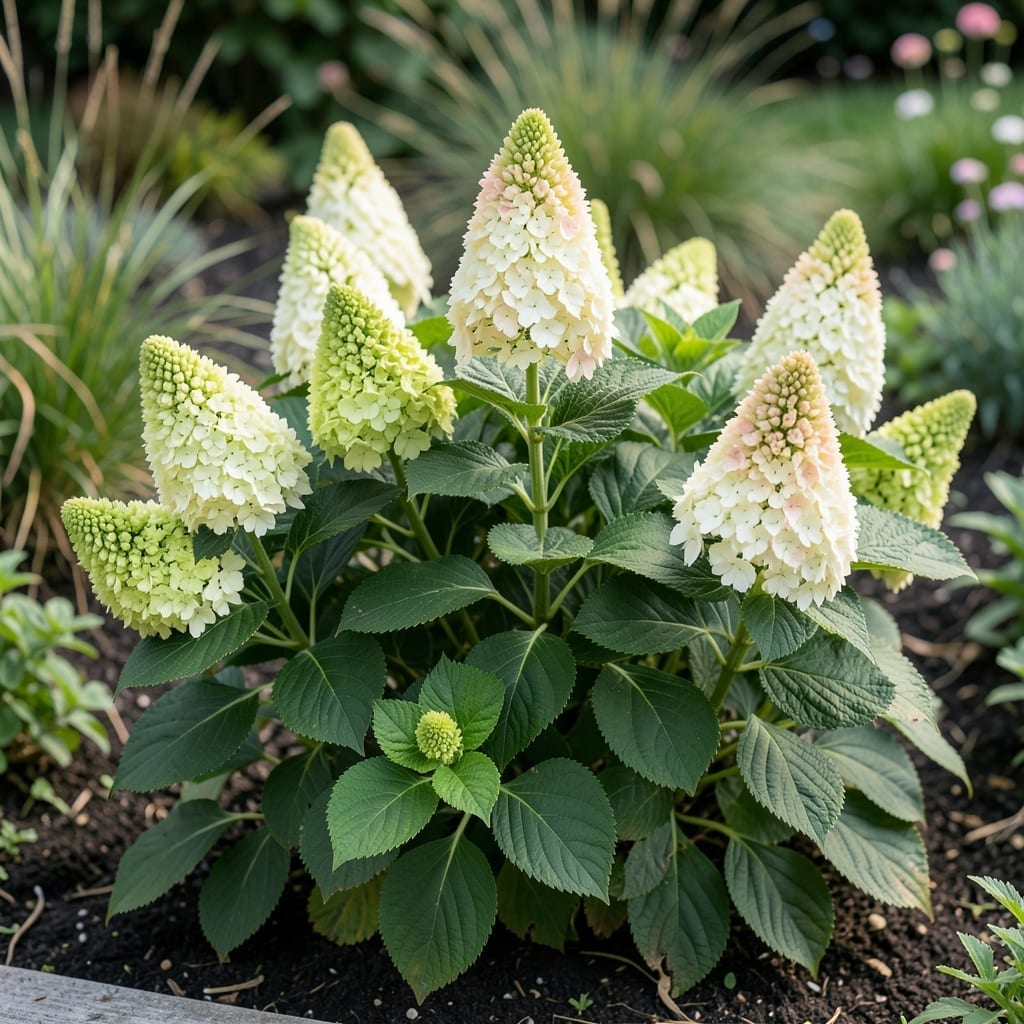
White Limelight hydrangeas transformed my summer garden with their cone-shaped blooms. The key is understanding their simple needs—right light, proper soil, and timely pruning.
I’ve grown these for years, and they reward minimal effort with months of stunning flowers. They thrive in partial sun, tolerate heat, and bloom on new wood, so even late pruning won’t ruin the show.
📚 In This Guide
To care for your White Limelight Hydrangea and keep it thriving, gather these essentials: Hydrangea paniculata ‘Limelight’ plants (1 per planting spot) 🌿. You’ll need well-draining, loamy soil (5-10 lbs per plant) with a pH of 6.0–7.0 for optimal growth. Grab a shovel, gardening gloves, and a watering can or hose for planting and maintenance.
For ongoing care, have organic mulch (2–3 inches) to retain moisture and balanced fertilizer (10-10-10, 1–2 lbs per plant) to promote blooms. Prune with sharp bypass pruners in late winter or early spring. A pH testing kit helps monitor soil acidity, and compost (1–2 cups) can enrich the soil if needed.
Here’s my proven method for coaxing the biggest, brightest blooms from these showstoppers.
Choose a spot with morning sun and afternoon shade—this variety thrives with 4-6 hours of direct light daily. Too much sun scorch the petals, while too little results in weak, sparse blooms. I always test the location for a full day before planting to confirm the light pattern.
Ensure the soil drains well but retains some moisture. Limelight hydrangeas prefer rich, loamy soil with a pH of 6.0-7.0. If your soil is heavy clay, amend it with organic matter to improve structure. Avoid low-lying areas where water pools after rain.
Dig a hole twice as wide as the root ball but no deeper. Planting too deep suffocates the roots and stunts growth. Set the plant so the top of the root ball sits 1-2 inches above the surrounding soil to allow for settling.
Space plants 6-8 feet apart to give them room to mature. Limelight hydrangeas grow 6-8 feet tall and 4-6 feet wide, so crowding leads to poor air circulation and disease. Backfill with native soil mixed with compost, then water thoroughly to eliminate air pockets.
Water deeply 2-3 times per week for the first season, ensuring the soil stays consistently moist but not soggy. I check the soil by sticking my finger 1-2 inches deep—if it feels dry, it’s time to water. Drought stress during the first year can weaken the plant permanently.
Once established, Limelight hydrangeas are moderately drought-tolerant but bloom best with regular moisture. Use a soaker hose or drip irrigation to keep foliage dry and prevent fungal issues. Mulch with 2-3 inches of organic material to retain moisture and suppress weeds.
Prune in late winter or early spring before new growth begins. Limelight hydrangeas bloom on new wood, so you can cut them back hard without losing flowers. I remove about one-third of the oldest stems at the base to encourage vigorous new growth.
Avoid pruning after mid-summer—this removes potential flower buds for the next season. Deadhead spent blooms immediately to redirect energy into new growth. Always use clean, sharp pruners to make smooth cuts and prevent disease transmission.
Apply a balanced, slow-release fertilizer in early spring as new growth appears. I use a 10-10-10 or 12-12-12 formula and follow the package instructions for application rates. Over-fertilizing leads to excessive leafy growth at the expense of blooms.
For an extra boost, I supplement with a high-phosphorus fertilizer just before blooming to encourage larger, more abundant flowers. Water thoroughly after fertilizing to prevent root burn. Stop fertilizing by late summer to allow the plant to harden off before winter.
These insights will help you avoid common pitfalls and get the most from your plants.
Light Requirements: The 4-6 hours of direct light mentioned in Step 1 is non-negotiable for vibrant blooms. I’ve found that morning sun is ideal, as afternoon heat can scorch the petals. If your space only gets intense afternoon sun, consider partial shade or a location with dappled light.
Soil Preparation: In Step 1, the emphasis on rich, loamy soil with a pH of 6.0-7.0 is key. Test your soil before planting and amend it with compost if it’s too heavy or sandy. Limelight hydrangeas won’t thrive in waterlogged or overly alkaline conditions.
Watering Wisdom: The 2-3 times per week watering schedule in Step 3 is critical during the first season. Here’s what nobody tells you—overwatering is just as harmful as underwatering. Stick your finger 1-2 inches deep into the soil to check moisture levels before watering. If it feels dry, it’s time to water; if it’s damp, wait.
Pruning Timing: Step 4’s guidance to prune in late winter or early spring is essential because these hydrangeas bloom on new wood. Pruning at the wrong time, like after mid-summer, can cost you next year’s flowers. I remove about one-third of the oldest stems to rejuvenate the plant without sacrificing blooms.
Water deeply 2-3 times per week, especially during hot summers. Keep the soil moist but not soggy—mulching helps retain moisture.
Yellow leaves often indicate overwatering or poor drainage. Check soil moisture and ensure the plant isn’t sitting in water. A balanced fertilizer can also help.
Prune in late winter or early spring before new growth starts. This encourages strong stems and abundant summer blooms.
Yes! Use a large pot with well-draining soil and full sun to partial shade. Container plants may need more frequent watering and fertilizer.
Ensure it gets 6+ hours of sunlight daily, prune properly, and use a bloom-boosting fertilizer high in phosphorus. Avoid over-fertilizing with nitrogen.