
Beautiful Plants For Your Interior
Beautiful Plants For Your Interior
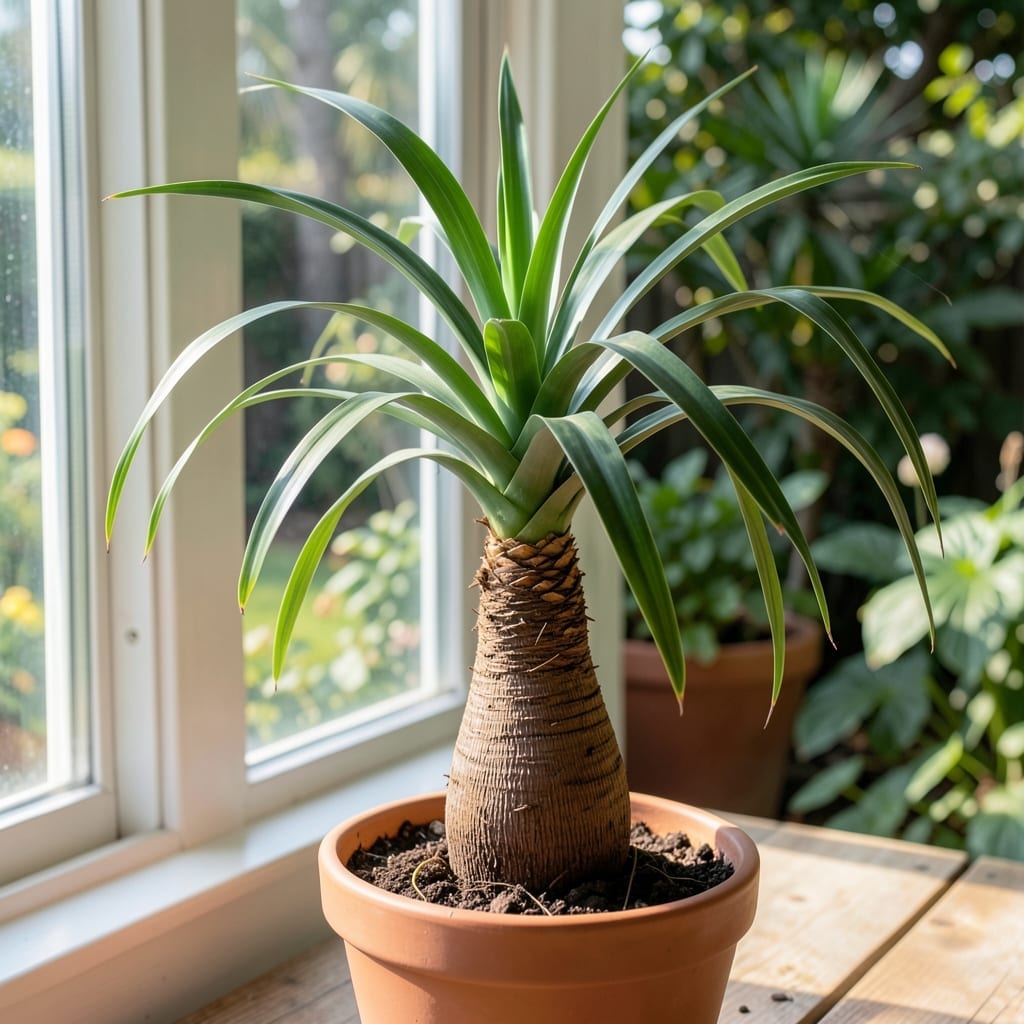
My ponytail palm looked ready for the compost pile until I fixed the leaves. These desert natives thrive on neglect, but their long, curly fronds reveal exactly what they need.
Browning tips scream “too much water,” while pale leaves beg for sunlight. Once you learn the language, 30 seconds of daily observation keeps this foolproof plant looking sharp for decades.
📚 In This Guide
Here’s the method I rely on to keep this desert native thriving with minimal effort.
This plant stores water in its trunk, so it prefers dry conditions over consistent moisture. I water mine deeply but only when the soil is completely dry—usually every 3-4 weeks in summer and even less in winter. Stick your finger 2 inches into the soil to check; if it feels dry, it’s time to water.
Overwatering is the most common mistake. Yellowing leaves or a soft, mushy trunk are signs you’re giving it too much. If you see this, stop watering immediately and let the soil dry out completely before resuming.
Ponytail palms love bright, indirect light but can tolerate some direct sun. A south or west-facing window is ideal. If you notice the leaves fading or the plant stretching toward the light, it needs more exposure. Rotate the pot a quarter turn weekly to encourage even growth.
Insufficient light leads to leggy, weak growth. If your space lacks natural light, supplement with a grow light for 6-8 hours daily. Keep the light 6-12 inches above the plant to mimic sunlight intensity.
Plant in a cactus or succulent mix to ensure sharp drainage. Regular potting soil holds too much moisture and can cause root rot. If you only have standard mix, amend it with 50% perlite or coarse sand to improve drainage.
Choose a container with drainage holes—no exceptions. Without them, water pools at the bottom, suffocating the roots. Terra cotta pots are a great choice because they wick away excess moisture through their porous walls.
Keep your plant in temperatures between 65-85°F. It can tolerate brief dips to 50°F but will suffer damage below that. If you’re moving it outdoors in summer, acclimate it slowly to prevent shock.
Low humidity is fine, but if your air is extremely dry, mist the leaves lightly every 2-3 weeks. Avoid getting water in the crown, as this can lead to rot. A small humidifier nearby can also help, but it’s not required.
Ponytail palms are light feeders. I fertilize mine once in spring and once in summer with a diluted liquid fertilizer (half-strength). Too much fertilizer causes salt buildup in the soil, leading to brown leaf tips.
If you notice a white crust on the soil surface, flush it with water to remove excess salts. Always water the plant thoroughly before fertilizing to prevent root burn. Skip fertilizing entirely in fall and winter when growth slows.
These practical insights will help you avoid the most frequent issues with this hardy plant.
The Water Factor: Remember that those 3-4 weeks between waterings in summer aren’t just a suggestion—they’re critical. I learned the hard way that sticking your finger 2 inches into the soil is the only reliable way to check. If the soil feels even slightly damp at that depth, wait another week.
Light Placement: For the grow light mentioned in Step 2, that 6-12 inches distance is non-negotiable. Too close and you’ll scorch the leaves; too far and it’s ineffective. I use a simple timer to ensure my plant gets exactly 6-8 hours daily when natural light is scarce.
Temperature Wisdom: That 65-85°F range is ideal for a reason. I once left mine near a drafty window during a cold snap, and the brief dip below 50°F caused noticeable stress. Move your plant away from cold windows or air conditioning vents to maintain stable warmth.
Brown leaves often signal underwatering or low humidity. Check the soil—if it’s bone-dry, water deeply. For crispy tips, mist the leaves or place a tray of water nearby to boost humidity. Avoid overwatering, as soggy roots can also cause browning.
Water every 3–4 weeks in spring/summer and even less in winter. These desert natives store water in their trunk, so let the soil dry completely between waterings. When in doubt, wait—it’s better to underwater than overdo it!
No, leaf cuttings won’t root. Instead, propagate from offsets (pups) that grow at the base. Gently separate a pup with roots and pot it in well-draining soil. Patience is key—new growth takes time!
If leaves are beyond repair, trim them with clean shears. Focus on healthy growth by ensuring bright, indirect light and minimal water. For a fuller look, consider adding a second plant nearby or opt for drought-tolerant alternatives like snake plants.