
Beautiful Plants For Your Interior
Beautiful Plants For Your Interior
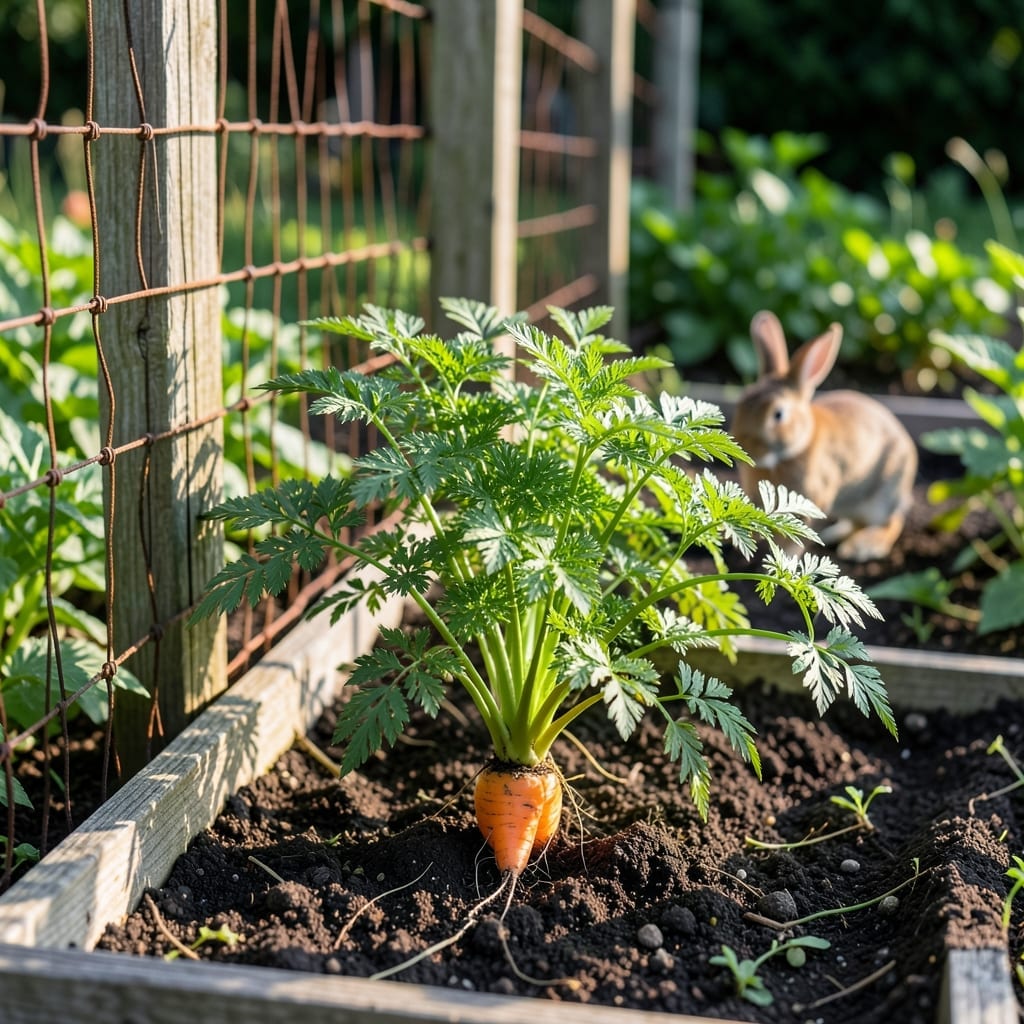
Install a 2-foot-high chicken wire fence buried 6 inches deep, use natural repellents like marigolds or hot pepper spray, and remove hiding spots like tall grass to deter rabbits humanely.
I’ve found physical barriers work best because rabbits are persistent diggers and jumpers. 🔥 The buried depth stops them from tunneling underneath, while the height prevents most leaps. Natural repellents add an extra layer by targeting their sensitive noses without causing harm.
Seasonal patterns matter too—spring and summer see the most activity as they search for tender shoots. 💫 Combining methods gives you the strongest defense against these clever garden visitors.
💡 In This Article
Rabbits target gardens because they’re naturally drawn to tender young plants, especially leafy greens, beans, and carrots. Their diet consists of 70-80% grasses and forbs in the wild, making your vegetable patch an irresistible buffet.
They’re most active at dawn and dusk when they can feed undisturbed, consuming up to 1 pound of vegetation daily per adult. 🔥
These animals are impressive athletes—capable of jumping 2-3 feet high and digging 1-2 feet deep. Their powerful hind legs generate enough force to clear low fences, while their strong front paws and sharp claws make quick work of loose soil. This is why standard barriers often fail unless properly designed. 💫
Breeding habits worsen the problem. A single female can produce 20-30 offspring annually, with babies reaching sexual maturity in just 3-4 months. This rapid population growth means what starts as a minor nuisance can explode into a full-scale garden invasion by mid-summer.
Seasonal patterns show peak damage in spring and early summer. This aligns with their breeding season and the abundance of fresh growth. Rabbits also seek shelter in tall grass and brush during hot days, making overgrown areas near gardens particularly attractive as resting spots between feeding sessions. ✨
Their territorial nature means once they establish a feeding route to your garden, they’ll return repeatedly. Rabbits have excellent spatial memory and can navigate back to food sources from over 2 miles away, making early intervention crucial before habits form. 🌟
A 2-foot-high fence is the minimum to deter most rabbits. For extra protection, add 6-12 inches buried underground to prevent digging.
Yes, when applied consistently. Sprays with garlic, hot peppers, or putrescent eggs create strong scents rabbits avoid. Reapply after rain for best results.
Marigolds, onions, and herbs like rosemary deter rabbits with their strong aromas. Plant them around vulnerable crops.
Rabbits feed most at dawn and dusk. They’re especially active in spring and early summer during breeding season.
They have excellent spatial memory and can navigate back from 2 miles away. Once they find food, they’ll return repeatedly.